Quick answer: To charter a barge in the UAE, define your cargo weight and footprint, choose the barge type (flat-top, spud or crane), match a tug with enough bollard pull for the route, agree the charter period and terms, and allow time for inspections, permits and insurance.
Choose the right barge type
- Flat-top (deck) barge – for project cargo, construction materials, vehicles and equipment.
- Spud barge – held in place by spud legs, giving a stable work platform for marine construction.
- Crane barge – a barge with a crane for lifting, piling and installation work.
- Self-propelled barge – moves without a separate tug for shorter coastal routes.
Size the barge to the cargo
Provide the total weight, dimensions, and how the cargo will be secured. Deck strength (tonnes per square metre), deadweight and deck area all matter. A naval architect may need to check stability and sea fastening for heavy items.
Match the tug
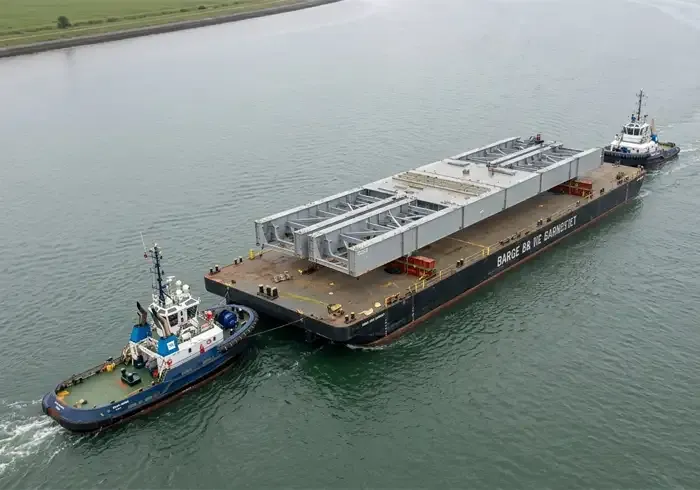
Tug size depends on the barge size, the route, expected weather and port requirements. Longer coastal tows need tugs with greater bollard pull and suitable towing gear.
Agree the charter terms
Common options are daily, monthly or project charters. Confirm what the rate includes – crew, fuel, insurance, mobilisation and demobilisation – and the off-hire conditions.
Permits, inspection and insurance
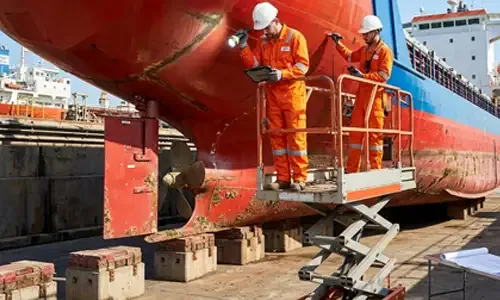
Allow time for an on-hire survey, port permissions and, for some cargoes, marine warranty surveyor approval. Check that the charter includes suitable insurance cover.
Ocean Connect arranges barge and tugboat charters in Dubai and the UAE, matching equipment to the job and handling the paperwork.
Frequently asked questions
What information is needed to charter a barge?
Cargo weight and dimensions, loading and discharge points, dates, charter duration and any lifting or positioning requirements.