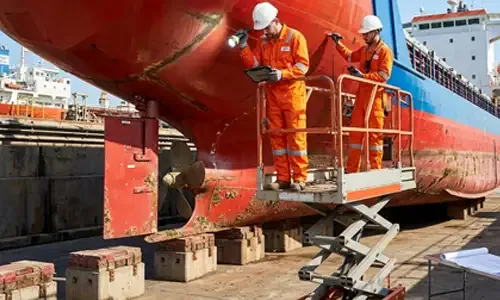
Quick answer: Choose an afloat repair when the work is above the waterline or inside the vessel (steel, piping, machinery, electrical, deck equipment) – it is faster and avoids dock charges. Dry docking is needed for underwater hull, propeller, shaft, rudder and sea valve work, hull coating renewal and most class bottom surveys.
What can be repaired afloat?
- Steel renewal and hull repairs above the waterline
- Piping, valves and tank repairs (with gas-free certificates)
- Main engine, generator, pump and compressor overhauls
- Electrical, automation and navigation equipment
- Deck machinery, cranes, winches and hatch covers
- Topside and deck painting
What needs a dry dock?
- Underwater hull blasting and antifouling
- Propeller, tail shaft, stern tube seals and rudder work
- Sea chests and overboard valves (unless blanked by divers)
- Bottom plating renewal
- Class bottom surveys (unless an in-water survey is accepted)
Cost and time
Afloat repairs avoid dock-day charges, towage and lost trading days, and can often be done during a normal port call. A dry docking has a higher fixed cost but allows all underwater work to be done together – which is why owners group these jobs into the planned docking.
Middle option: in-water work by divers
Hull cleaning, propeller polishing, underwater inspections and some temporary repairs can be done by approved diving teams without docking, sometimes with class acceptance.
How to decide
- List the defects and mark which are below the waterline.
- Check class survey due dates – can an upcoming docking absorb the work?
- Ask a repair contractor whether a temporary afloat repair is acceptable until the docking.
Ocean Connect provides 24/7 afloat ship repair across UAE ports and dry docking coordination in Dubai Maritime City.
Frequently asked questions
Is afloat repair cheaper than dry docking?
Usually yes, because there are no dock-day, towage or docking charges and the vessel can keep trading. But underwater work can only be done in dry dock or by divers.
Can class accept a repair done afloat?
Yes, for work above the waterline carried out to an approved procedure and witnessed by the surveyor when required.